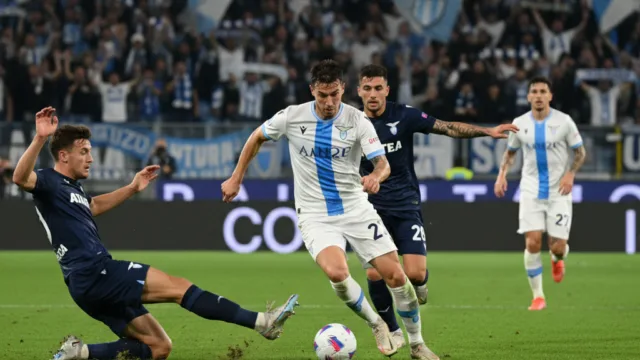
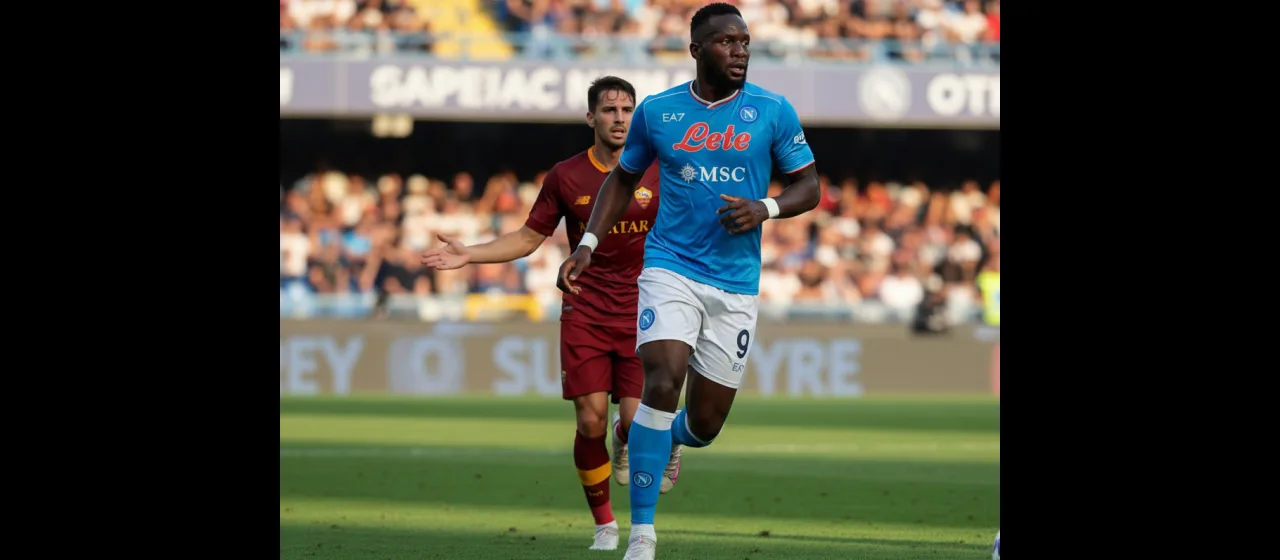
Napoli players defend Lukaku amid difficult Serie A period

Napoli players defend Lukaku amid ongoing scrutiny of the Belgian striker’s performance at the Serie A club, with key teammates rallying behind the forward during what has been an undeniably difficult period. Matteo Politano, the Napoli winger, has been vocal in his support, insisting that the squad harbors no animosity toward Lukaku despite recent struggles both on and off the pitch.
The Belgian international, who arrived at the Stadio San Paolo with considerable expectations, has faced mounting pressure as his goal tally failed to meet the astronomical standards set by his predecessors. However, Napoli players defend Lukaku by emphasizing the challenges he has encountered since joining the Partenopei, pointing to factors beyond mere tactical adjustments or form fluctuations.
Leonardo Spinazzola, the club’s left-back, has been particularly vocal in describing Lukaku as a “gentle giant” who has endured personal difficulties that have impacted his on-field performance. The Italian defender’s comments underscore a broader sentiment within the dressing room that extends beyond the traditional scope of football analysis.
Team Unity and Internal Support
The unity displayed by Napoli players defend Lukaku through their public statements reflects a mature understanding of the pressures inherent in professional football at the highest level. Politano’s insistence that there exists “no problem” with the striker suggests that internal relations remain solid despite external criticism and media speculation surrounding the player’s future at the club.
This internal solidarity is crucial for any squad attempting to maintain competitive standards throughout a demanding Serie A campaign. The willingness of senior players like Spinazzola to publicly endorse Lukaku sends a powerful message to the broader football community, demonstrating that the club’s hierarchy and playing staff remain committed to supporting the forward through his challenging period.
Such backing becomes particularly significant when considering the intense scrutiny that accompanies high-profile signings in Italian football. Serie A has a rich history of dramatic transfers and equally dramatic downturns, making player solidarity a vital component of weathering difficult periods.
Contextualizing Lukaku’s Challenges
Understanding why Napoli players defend Lukaku requires examining the multifaceted nature of his difficulties since arriving in Naples. Beyond statistical underperformance, the Belgian striker has navigated personal circumstances that have understandably affected his mental state and consistency on the pitch. Spinazzola’s characterization of Lukaku as a “gentle giant” acknowledges this human dimension often overlooked in traditional football discourse.
The striker’s adaptation to Italian football has proven more complex than anticipated. Serie A’s defensive sophistication, combined with tactical adjustments required to accommodate Lukaku’s playing style, has necessitated a prolonged period of acclimatization. His teammates recognize this reality, hence their willingness to defend Lukaku against mounting external pressure.
Previous seasons have demonstrated that Belgian internationals often require extended periods to establish themselves in Italian football. The defensive intensity and tactical nuance demanded by Serie A clubs represents a significant adjustment from other European leagues, and Lukaku’s situation is hardly unique in this regard.
Media Pressure and External Narratives
Napoli players defend Lukaku partly in response to increasingly negative narratives constructed by sections of the Italian media. The pressure surrounding underperforming marquee signings in Serie A can become overwhelming, with journalists and commentators often emphasizing shortcomings rather than acknowledging contextual factors contributing to performance fluctuations.
Politano and Spinazzola’s public endorsements serve as counterbalance to this overwhelmingly critical discourse. Their statements suggest that the playing squad maintains perspective regarding Lukaku’s situation, recognizing both his quality as a footballer and his value as a teammate despite recent struggles.
The Italian media landscape has historically been unforgiving toward foreign players experiencing difficult periods. Understanding Serie A’s unique cultural approach to player evaluation provides essential context for comprehending why Napoli players feel compelled to defend Lukaku publicly.
Future Prospects and Path Forward
The backing provided by Napoli players defend Lukaku’s prospects at the club moving forward. Squad solidarity becomes instrumental in facilitating player recovery during challenging periods, providing psychological support that extends beyond tactical coaching or statistical analysis.
Spinazzola’s description of Lukaku as having “faced a really difficult time personally” acknowledges that performance issues in football frequently possess psychological components requiring sensitivity and understanding from teammates and coaching staff. This recognition demonstrates maturity within the Napoli squad regarding mental health and personal welfare in professional sports.
Looking ahead, the support articulated by senior players suggests that the club remains invested in Lukaku’s success rather than pursuing alternative solutions. This commitment, combined with continued tactical refinement and personal resilience from the striker himself, may yet facilitate the turnaround that both the player and the club desperately require.
Conclusion: Character and Resilience
Ultimately, Napoli players defend Lukaku because they recognize both his quality as a footballer and his character as a person. In professional football, where external pressures frequently mount and criticism becomes relentless, the support of teammates often proves decisive in determining whether a player successfully navigates difficult periods or succumbs to mounting pressure.
The Belgian striker’s journey at Napoli remains ongoing, with his ultimate success dependent upon multiple variables including tactical adjustments, personal resilience, and continued team support. The public backing from Politano and Spinazzola provides an encouraging foundation upon which such success might ultimately be constructed, demonstrating that within the Napoli squad, solidarity and understanding remain paramount values.